For decades, academic economics has shaped public policy, influenced central banks, and justified large-scale governmental decisions. Yet today, after repeated forecasting failures, financial crises, and widening political polarisation, policymakers and the public alike increasingly question the reliability of academic economics (Rodrik, 2015). The scepticism that has arisen is not irrational, but rather emerges from structural problems within the discipline: a replication crisis, distorted publication incentives, ideological biases, and declining transparency.
The three groups, i.e., ordinary citizens, policymakers, and academics themselves, experience the stated crisis differently, yet their perspectives converge on a common problem: the trustworthiness of economic knowledge is under strain.
Economic Research Feels Detached From Reality: The Public Viewpoint
For the public, distrust often stems from lived experience. When economic forecasts fail, such as pre-2008 assurances of financial stability or inaccurate inflation projections, ordinary people interpret these miscalculations as signs that economic ‘experts’ operate in an insulated world (Stiglitz, 2018).
Three recurring themes shape public scepticism:
- Forecasting failures: People remember moments when economists assured them a recession was unlikely, only for crises to unfold.
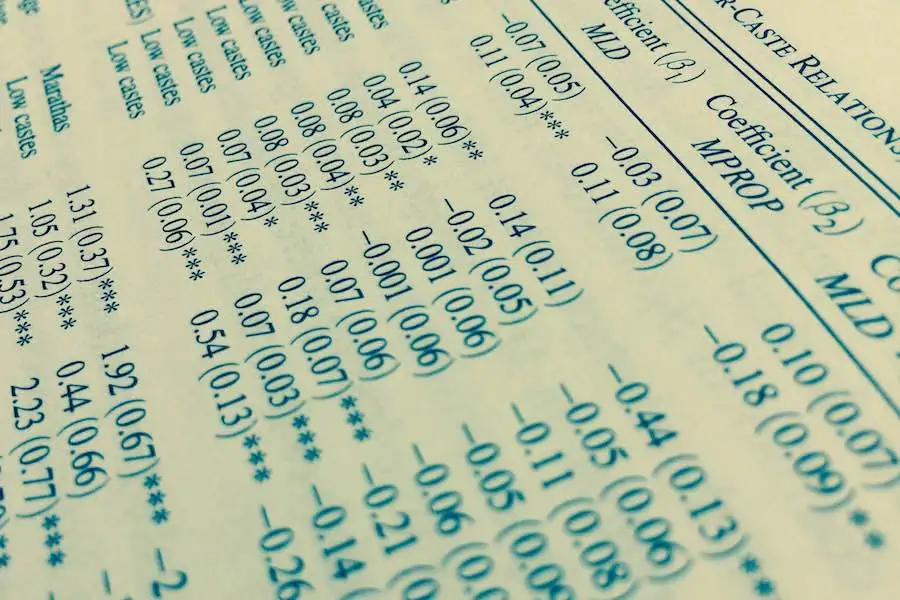
- Technical opacity: Economic papers rely on mathematical modelling that appears unintelligible to non-specialists. This opacity creates an informational asymmetry that the public experiences as paternalistic expert authority (Berg, 2018).
- Value misalignment: Citizens often perceive economists as prioritising markets, efficiency, or growth over human concerns such as wages, inequality, or social protection (Piketty, 2014).
- The ‘double disconnect’: Kowalski (2025) identifies two widening gaps, namely, between public economic data (GDP, CPI, unemployment) and lived experience, and between media narratives and what people witness in their communities. When official statistics report growth but households feel financially strained, public trust collapses. People conclude that the data are manipulated or selectively framed.
Evidence Fatigue and Strategic Selectivity: The Policymaker Perspective
Policymakers demand research that is timely, clear, and reliable; however, instead, they often encounter findings that cannot be replicated (Camerer et al., 2016), contradictory results across studies addressing the same problem, and highly stylised assumptions that fail to translate into policy design. This leads to what some scholars call ‘evidence fatigue’, a frustration with the sheer volume of economic studies that offer conflicting answers (Christensen & Miguel, 2018).
Jamieson et al. (2025) show that business confidence often tracks political identity more than economic reality. When policymakers see indicators infused with political bias, they grow sceptical of expert-generated data. Additionally, because policymakers operate in political environments, economic research is often selectively used. Studies that support a desired policy direction are amplified; those that challenge it are ignored (Fourcade et al., 2015). Over time, this selective citation reinforces the perception that economic research is less an objective guide and more a political tool.
Structural Incentives Undermine Credibility: The Academic Perspective
Among economists themselves, the trust problem is understood as structural rather than personal. Scholars increasingly acknowledge the discipline’s internal weaknesses, including a replication deficit that exposes fragility in influential findings (Ioannidis et al., 2017), publication incentives that reward novelty over rigour and significance over substance (Heckman & Moktan, 2020), and ideological homogeneity in top journals and departments, limiting theoretical diversity (Javdani & Chang, 2025).
Economic models of trust show that distrust itself becomes self-reinforcing. According to the MIT ‘Cycles of Distrust’ working paper (2012), when experts are repeatedly wrong, audiences rationally discount future claims, even when they are correct. This dynamic affects academics too, making them sceptical of each other’s findings and increasingly critical of methodological shortcuts.
Consequences of Declining Trust
The erosion of confidence in economic research carries substantial societal risks.
Policymakers Discount Expertise
During crises, from the 2008 crash to the COVID-19 pandemic, governments increasingly prioritise political instincts over economic evidence (Stiglitz, 2018).
Rise of Alternative ‘Experts’
Online commentators often gain more influence over public opinion than academic economists, even when lacking empirical grounding.
Reduced Support for Evidence-based Policy
Key areas such as climate action, inequality, and welfare design suffer when economic research is dismissed as unreliable.
Trust is foundational to policymaking; without it, economic debates risk devolving into ideological battles rather than evidence-driven reasoning.
Rebuilding Credibility and more
Despite current challenges, multiple reforms offer pathways forward.
Transparency and Open Science
Greater sharing of data, code, and replication files improves verification and reduces analytical opacity (Christensen & Miguel, 2018).
Pre-registration and Registered Reports
Borrowed from medical science, pre-registration discourages p-hacking and strengthens methodological rigour.
Valueing Replication
Journals and funding bodies are slowly beginning to reward replication work, helping correct publication bias.
Methodological and Theoretical Diversity
Incorporating behavioural, institutional, feminist, and development economics encourages pluralism and reduces ideological rigidity.
Reforming Publication Incentives
Rewarding quality, robustness, and transparency over novelty can shift the culture of research production (Heckman & Moktan, 2020).
Conclusion
Growing distrust towards economic academic papers is not a singular problem but a multi-perspective crisis. The public feels alienated, policymakers feel overwhelmed, and academics feel constrained by flawed systems. Economics remains essential to understanding global crises, development, and inequality, but its authority depends on demonstrating transparency, humility, and methodological integrity. Restoring trust will require structural change, interdisciplinary openness, and a renewed commitment to evidence that mirrors the complexities of real life.
Written By – Arya Sawant
Edited By – Vania Jain