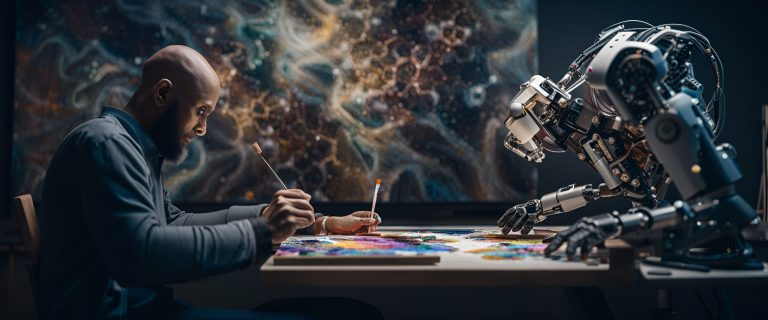
The algorithm always orders vanilla. Human Creativity vs Artificial Intelligence: Who Wins?
Stand at an ice cream counter with thirty-one flavours and you’ll feel a small tug of war. Do you order the pistachio you’ve had a hundred times, or risk the lavender honey swirl that might be transcendent or might ruin the next ten minutes? This is the exploration-exploitation tradeoff, and it isn’t really about ice cream. It governs how you pick a restaurant, a job, a partner. Play it safe and you’ll never be disappointed, but you won’t learn anything. Explore endlessly and you’ll gather experience without ever capitalising on it. Growth lives in the balance, and exploration in particular is how taste, personality and identity take shape. Increasingly, we hand that exploration to machines built to avoid it. That is the heart of the AI versus human creativity debate: If technology is tuned for safety, what happens to work that depends on risk?
WHY AI PLAYS IT SAFE.
Netflix carries thousands of titles and Spotify tens of millions of songs, so we lean on algorithms to narrow the field. But these systems are built to keep you engaged and retained, and a disappointing recommendation is a churn risk. So they play the odds. Creative AI follows the same logic. One agency blog notes that post-production AI focuses on scaling what already works, while another frames AI’s edge as speed and volume, with hundreds of variations produced quickly. AI doesn’t lack imagination, it lacks incentive. In the short term that even serves us well, since nobody minds another song they love. The system optimizes correctly for its objective. The problem is the objective.
DEATH BY A THOUSAND RECOMMENDATIONS.
Each recommendation feels helpful, but over years your preferences drift towards what’s probable for people “like you” rather than what’s interesting about you. Princeton researchers showed, using simulations, that training recommenders on data from users already exposed to recommendations homogenises user behaviour without increasing utility. Creative work shows the same pattern. In a Science Advances experiment, stories written with AI-supplied ideas were rated more creative, yet they were more similar to each other than stories by humans alone. Writers were individually better off, collectively less novelty was produced. Everyone still feels unique, but the raw material of that uniqueness is being sanded down.
CAN TECHNOLOGY REPLACE CREATIVE WORK? AT THE MEDIAN, YES.

It’s tempting to think homogenisation undercuts replacement: surely a flattening AI can’t outcompete human originality? That gets the mechanism backwards. AI doesn’t need to match human creativity at its best. It needs to match the median of commercial creative work, and most of that was never in “stumbling into the unknown” territory. Ad copy, stock music, template design and formulaic scripts were already optimised for safe, audience-tested results, which is exactly what AI is built to hit.
The gap also closes from both sides. As algorithmic output narrows toward the proven, human creators, increasingly assisted by AI, drift toward the same median. The more human taste flattens, the less distance AI has to close. So AI is already replacing the exploitable end of creative work, the safe, provably effective 80%, but not the explorative 20%, the risky work nobody has proven yet. What remains human is intent: one industry guide argues that creative direction, brand voice and emotional storytelling remain human-led skills.
WHAT THE EVIDENCE SHOWS.
The evidence across industries fits this split:
• Writing. In 2023, Clarkesworld closed submissions after receiving about 500 machine-written stories alongside 700 legitimate ones, and its editor said the AI writing was very poor. AI flooded the market with volume, not originality.
• Advertising. McDonald’s Netherlands aired an AI-generated Christmas ad in December 2025 and pulled it three days later after severe backlash. Its producers insisted they had shaped thousands of generated takes in the edit. Coca-Cola’s improved 2025 AI ad reportedly earned 61% positive sentiment. Audiences reject the glitchy and accept the polished.
• Music. Universal settled with Udio and Warner with Suno in late 2025 while Sony kept litigating, and one industry blog reports that 44% of new Deezer uploads are AI generated.
JOBS AND COPYRIGHT.
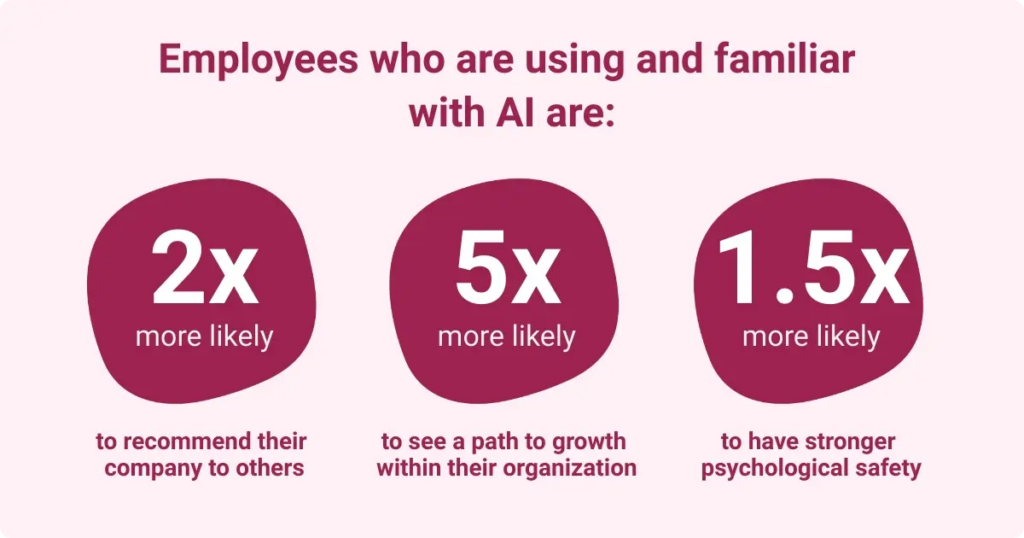
Employment is where the median argument bites. One industry guide lists displacement of some entry-level creative work and downward pricing pressure on freelancers among the risks, while noting that roles combining human judgment with AI speed tend to outperform either alone. Workhuman cites an Oxford Academic research finding that text-to-image tools raised human creative productivity by 25%. That measures productivity, not novelty.
Copyright is the other unresolved front. The US Copyright Office’s position, as summarised in the same guide, is that AI output is protectable only with sufficient human creative input, and a simple prompt doesn’t qualify. In the UK, the High Court rejected Getty’s secondary copyright claim against Stability AI, finding the model weights don’t store the original images. But lawyers noted the judgment gave very little clarity on whether training on copyrighted work is lawful. So whose exploration is being exploited remains legally open.
IS AI’S OUTPUT ORIGINAL?
Critics say AI recombines training data with no lived experience or emotional stake behind it. Defenders reply that human creativity is recombinant too, since genre, influence and remix don’t emerge from nowhere. The difference is the objective. A human remixing influences often reaches for something untested that might fail, an AI recombining training data reaches for what has already been validated. Same raw material, opposite aim. Some argue our definitions of creativity may need updating, but until then the useful line runs between recombination in service of risk and recombination in service of safety.
THE CASE FOR AMPLIFICATION.
The optimistic view deserves a hearing. Composer Holly Herndon, who built an AI version of her own voice, argues AI can handle routine tasks so creators have more time to experiment. Artist Refik Anadol combines machine-learning data sculpture with human emotion and cultural context, and tools like Canva lower the skill barrier for design. The writing study also found the biggest gains among less creative writers. But participants who used AI didn’t rate their own stories as more creative, though outside evaluators did, so we may not notice what AI is doing to our work.
RECLAIMING EXPLORATION.
So can technology replace creative work? The safe, formulaic part, yes, and it’s already happening. The risky edge, not while AI is rewarded for playing safe. That is a design choice, not a law of nature. We can prompt for the unlikely option, use AI to widen the search space, and reward systems for calibrated surprise instead of clicks. The tradeoff isn’t going away, but we still choose which side of it we hand to a machine that was never built to gamble on our behalf.
REFERENCES
1. https://gdi.ch/en/publications/trend-updates/us-artist-holly-herndon-on-ai-and-art
2. https://blog.dubspot.com/suno-udio-ai-music-lawsuits-2026
5. https://www.workhuman.com/blog/ai-and-creativity/
6. https://naapbooks.com/insights/blog/human-creativity-vs-artificial-intelligence-who-wins/
7. https://brandyhq.com/blog/ai-vs-creativity/
Written by: Pranav Bongirwar
Edited by: Maria Mabood