Why does gold remain a preferred Diwali purchase as rising prices change how much households can afford?
Each year on Diwali, families in India decide what they should buy to welcome prosperity into their lives. For many, this means investing in gold.
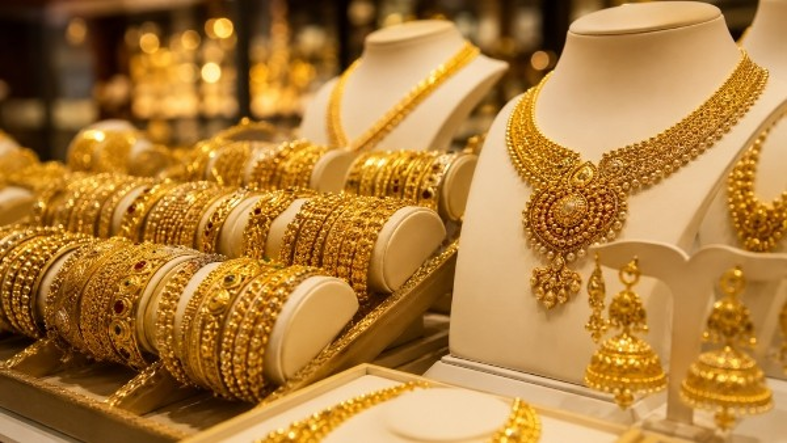
Buying a coin, a pair of earrings, or some jewellery on Dhanteras is seen as a symbol of good luck, financial stability, and something that can be handed down through the generations.
However, with rising gold prices, are Indian families buying more gold or spending more to get less?
WHY DOES GOLD HOLD SUCH A STRONG PLACE IN INDIAN HOUSEHOLDS?
Gold has a peculiar role in the Indian economy. It is a consumable product with a dual role as a home savings medium and an investment vehicle. Gold is bought as part of wedding- and festival-related spending, but it can be sold, swapped, or used as collateral if a family requires extra money.
Research by the India Gold Policy Centre at IIM Ahmedabad shows this.
WHEN THE PRICE RISES, DOES DEMAND REALLY FALL?
However, rising gold prices have created a paradox in the Indian jewellery sector.
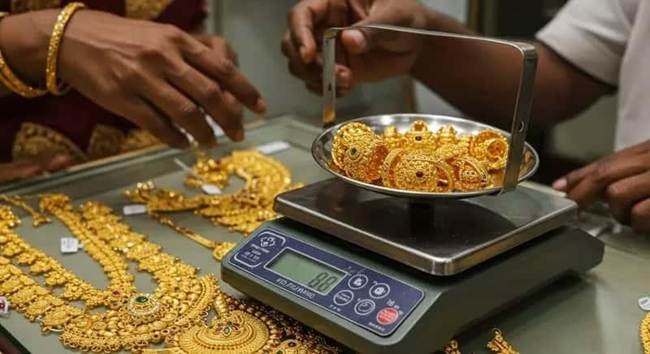
The volume of jewellery demand in India dropped by 24% to 430.5 tonnes from 563.4 tonnes in 2025. Despite this, the value of demand increased as consumers were paying more.
The trend continued in 2026, with jewellery demand falling by 15% year-on-year to 75.1 tonnes. However, the value of demand rose by 34% to around ?1.13 lakh crore in the second quarter.
This means that although the value of demand is increasing, this does not necessarily mean that households are buying more gold, as the price per gram has increased.
Consumers have responded by buying less heavy jewellery, melting down old gold, and buying smaller amounts. In May 2026, the government increased customs duty on imported gold.
THE INVESTMENT BEHIND THE TRADITION
Gold is considered a good investment to help diversify one’s savings.
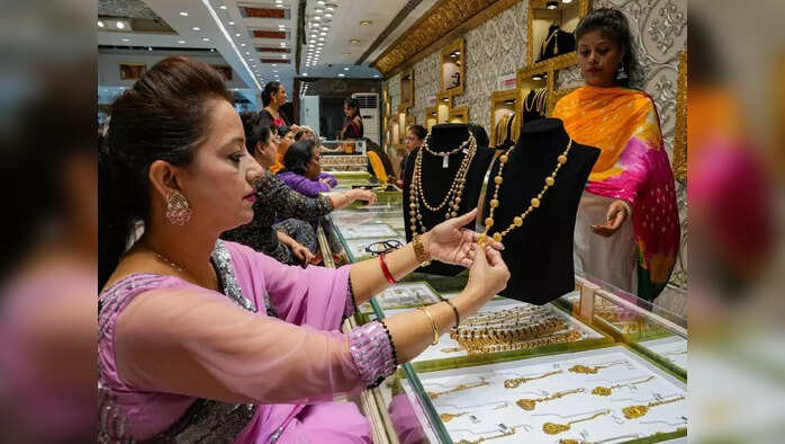
Investment demand in India increased by 17% between 2024 and 2025, reaching 280.4 tonnes for gold bars and coins (World Gold Council). Investment demand can increase even if jewellery becomes more expensive.
Gold is typically seen as an investment to protect savings in uncertain and inflationary times. However, gold does not always increase in price when there is inflation and may not always provide a positive return.
Jewellery can incur making charges and GST, and may have a resale discount. Investments can help investors gain exposure to gold prices without having to hold jewellery.
FROM JEWELLERY TO FINANCIAL ASSETS
Another option is Sovereign Gold Bonds (SGBs). These are government instruments represented in grams of gold.
They earn fixed interest of 2.5% per year, which is paid out every six months. However, while they earn interest, investors are also exposed to the price of gold, as the redemption value depends on it. This is different from gold jewellery, which earns no interest. Gold ETFs are also available on an exchange; however, investors will have to pay fees associated with the fund. Digital gold should be approached with caution, as in November 2025, SEBI issued a warning that many of these products are not regulated by it and may expose investors to counterparty risk.
WHAT IF THE SAME MONEY WERE INVESTED INSTEAD?
Suppose a household wants to invest ?1 lakh in instalments. It could instead invest the same amount every month in recurring deposits and earn interest. This creates an opportunity cost.
Depending on the terms and conditions of the jeweller’s scheme, it may function as a savings scheme. However, there may be interest and other charges associated with using a credit card EMI. The price of gold may also fluctuate. Therefore, it is worth considering whether paying finance charges to purchase the gold immediately makes sense.
ARE INDIANS BUYING MORE GOLD THIS DIWALI?
There is evidence of a shift in consumption patterns.
The World Gold Council’s October 2026 update said that gold ETFs witnessed inflows of ?4,450 crore in September—a seven-month high. However, digital gold purchases were 1.7 tonnes. High prices restrained jewellery demand.
There has not been a complete loss of interest, but there is a shift in what, how much, and how
people are investing in gold. Affordability and investment options will play a role in how much people buy during the festive season.
THE VALUE OF GOLD GOES BEYOND ITS PRICE
Gold has intrinsic value for Indians. It is part of their culture and a common form of household wealth. However, buying gold is also a financial decision. If a family decides to buy jewellery, that is a different decision from an investor buying an ETF or an SGB.
Perhaps Indians are not turning away from gold; they are just looking at it differently. While gold can be bought with the aim of becoming prosperous, preserving wealth requires understanding what you are paying for, what you are getting, and what opportunities you could have had with that money elsewhere.
Written by: Sachi Patil
Edited by: Heth Shah
REFERENCES
- Dvara Research & India Gold Policy Centre, IIM Ahmedabad. (2021). Savings in gold by low-income households: An empirical study. https://dvararesearch.com/savings-in-gold-by-low-income-households-an-empirical-study-2/dvararesearch
- Fortune India. (2026, July 30). India gold demand value jumps 50% to ?198,100 crore in Q2 2026. https://www.fortuneindia.com/economy/gold-demand-in-india-surges-by-50-to-198100-crores-in-q2-2026/151076
- GJEPC. (2026, January 29). India’s Q4 jewellery demand retreats as gold hits new peaks. https://gjepc.org/solitaire/indias-q4-jewellery-demand-retreats-as-gold-hits-new-peaks/
- Reuters. (2026, May 12). India raises gold and silver tariffs to 15% to curb imports. https://www.reuters.com/world/india/india-raises-import-tariffs-gold-silver-government-order-says-2026-05-12/
- Securities and Exchange Board of India. (2025, November 8). Caution to public regarding dealing in ‘Digital Gold’ (Press Release No. 70/2025). https://www.sebi.gov.in/sebi_data/attachdocs/nov-2025/1762580259409.pdf
- State Bank of India. (2024, December 20). Sovereign Gold Bond Scheme (SGB). Sovereign Gold Bond Scheme (SGB) https://sbi.bank.in/web/personal-banking/investments-deposits/govt-schemes/gold-banking/sovereign-gold-bond-scheme-s gb
- World Gold Council. (2026, January 29). Gold demand trends: Full year 2025 — Jewellery. https://www.gold.org/goldhub/research/gold-demand-trends/gold-demand-trends-full-year-2025/jewellery
- World Gold Council. (2026, May 22). India gold market update: Import tightening. https://www.gold.org/goldhub/gold-focus/2026/05/india-gold-market-update-import-tightening
- World Gold Council. (2026, July 30). Gold demand trends: India focus Q2 2026. https://www.gold.org/goldhub/research/gold-demand-trends/gold-demand-trends-india-focus-q2-2026sebi.gov
- World Gold Council. (2026, July 30). Gold demand trends: Q2 2026 — Investment. https://www.gold.org/goldhub/research/gold-demand-trends/gold-demand-trends-q2-2026/investmentgold
- World Gold Council. (2026, October 20). India gold market update: Seasonal demand shows early strength. https://www.gold.org/goldhub/gold-focus/2026/10/india-gold-market-update-seasonal-demand-shows-early-strength