
Imagine two people posting the same political opinion on the same social media platform. One post reaches thousands of people while the other barely reaches anyone. Neither has been banned. Yet one voice has been amplified while the other has almost disappeared.
This is the peculiar power of the digital age control which does not always require prohibition. Sometimes, deciding what becomes visible is enough.
The internet is shaped by the governments that make laws, corporations that run the platform and algorithms that decide what appears on our screen. Ordinary users have little power to question their decisions. Digital freedom is not about having the freedom to post something. It is also about being able to question the system that decides who gets heard.

Children face cyberbullying, grooming, sexual exploitation and are exposed to harmful material. Protecting them requires intervention, particularly against child sexual abuse material and non-consensual explicit images. However, illegal exploitation must be distinguished from lawful adult content.
The problem is also economic. Most major platforms generate advertising revenue through users, attention and behavioural data. Their commercial success depends partly on keeping people engaged, even when sensational content may be harmful. Network effects reinforced this power. The more the people join a platform, the more valuable it becomes. Users remain because their friends, communities and favourite creators are already there.
Consequently even a better competitor may struggle to attract an audience. UN trade and development has identified network effect, economies of scale and control over data as an important source of digital market power.
This concentration also affects how regulations work. Compliance with complex requirements involving age verification, data protection, content moderation can be expensive. Large tech companies may absorb these costs more easily than the smaller competitors. Poorly designed regulations could therefore strengthen the very market concentration it seeks to address. Users may technically have alternatives but that does not mean they have the realistic opportunities to leave.
PROTECTING CHILDREN WITHOUT NORMALISING SURVEILLANCE.
Australia’s Social Media Minimum Age framework which took effect on 10 Dec 2025, requires covered platforms to take reasonable steps to prevent Australians under 16 from holding accounts. Responsibility rests with the platform, not children or parents. The strongest argument behind this approach is that children should not be expected to navigate a platform design intended to maximise engagement without protection. However, restrictions may push young users towards a less regulated service or exclude them from beneficial online communities.
Age verification creates another contradiction. If proving one’s age requires unnecessary identity documents or facial analysis, child protection can become a privacy risk. Independent evaluation, data minimisation requirements and accessible appeals should accompany such restrictions. The central question is not about simply whether children should be protected, but whether protection can be achieved without creating an unnecessary system of identification and surveillance.
EXPERTISE AND THE CHINESE EXAMPLE.
In July 2025, Chinese authorities issued requirements regulating medical science content published by independent social media accounts. Platforms were directed to verify relevant professional qualification display misleading medical advertising.
People without medical qualification should not be able to present themselves as medical experts but that does not mean professional qualification should become conditions for participating in every discussion. Medical qualifications matter when someone offers professional medical advice but they should not become a universal requirement for sharing personal experience or questioning healthcare institutions. Regulations must protect people from fabricated expertise without turning credentials into a monopoly over public debate.
THE ALGORITHM: A GATEKEEPER WITHOUT A PUBLIC MANDATE.
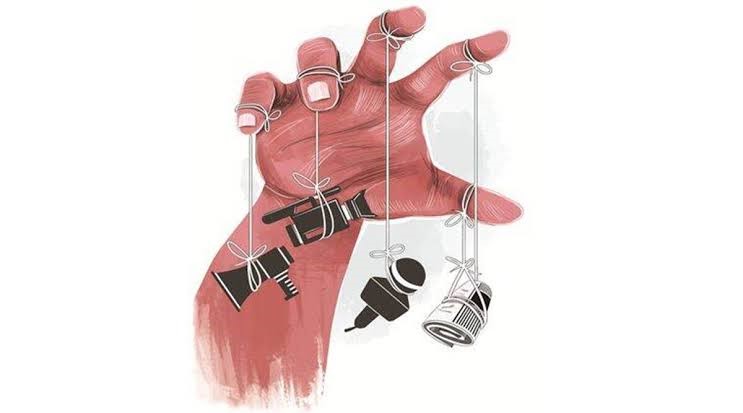
Traditional censorship removes information. Algorithmic power can make it practically invisible without deleting it. Platforms decide which political discussions receive recommendations, which news stories gain visibility and which creators struggle to reach audience and the users rarely know why.
This creates information asymmetry. The platforms are aware of how their ranking systems and algorithms work, while users experience only their outcomes. Government control over the algorithm could create another dangerous political interference in public debate.
Better safeguards include independent audits, disclosure of significant ranking practices and genuine alternatives such as non-personalised feeds. Users should be able to understand why the content is recommended, restricted or made less visible. The objective should not be to eliminate algorithmic decision making but to make its implementation transparent and accountable.
META AND THE POLITICS OF TRUTH.
In Jan 2025, Meta announced that it would end third party fact checking in the United States and move towards community notes. The transition began on 7 April 2025. The decision continued into 2026. On 26 March 2026, the Meta Oversight Board issued a policy advisory opinion warning that expanding community notes instead of professional fact checking could lead to several issues. On 9 September, Meta began testing community notes in 16 Spanish speaking Latin American countries. The board subsequently reiterated its concerns cautioning against treating crowdsourced notes as direct replacement for professional fact checking.
These developments demonstrate that the debate over misinformation is no longer limited.
Meta argued that fact checking sometimes restricts legitimate expression. This concern deserves consideration as professional fact checkers can make mistakes and moderation can influence public debate.
However, community notes rely on contributors with differing perspectives agreeing that a note provides useful context. Consensus is not necessarily accuracy. A correct warning may fail to gain agreement, while coordinated contributors may influence participation.
The change also affected the consequences of fact checking. Under Meta’s announced approach in the United States, fact checking posts would no longer face the pervious distribution penalties. This changes more than the way content was moderated. It also changed how misinformation would be addressed. Platforms need to begin sharing data on transparency and appeals so their approaches can be independently evaluated.
ENCRYPTION AND CONSTITUTIONAL LIMITS.
End to end encryption ensures that only communicating users can ordinarily read their messages. Governments argue that it has complicated investigation into serious crimes, including child exploitation. Yet weakening encryption can expose ordinary users journalists and businesses to security vulnerabilities.
India’s IT rules, 2021 Rule 4(2) addresses identification of the first originator of particular information. The requirements apply to significant messaging intermediaries through a qualifying judicial. Sec 69 orders subject to specified conditions and safeguards, including consideration of less intrusive alternatives. It does not authorize unrestricted access to everyone’s messages.
India’s Supreme Court established important constitutional limits. Shreya Singhal v. Union of India (2015) struck down section 66A of the IT Act. Justice K.S Puttaswamy v. Union of India (2017) recognised privacy as a fundamental right. In Anuradha Bhasin v. Union of India (2020), the court affirmed constitutional protections for internet based expression and held that indefinite internet suspension is impermissible.
The Digital Personal Data Protection Act 2023 and Rules 2025 further develop India’s framework for personal data protection. The rules notified on 14 November 2025 introduced a framework for governing the processing of digital data alongside protection and the rights for the data principal i.e. the individual. Just because the government has the technology to monitor people’s digital activities doesn’t mean it has the legal right to do so without proper justification.
MAKING DIGITAL POWER ACCOUNTABLE.
A credible framework must make digital power contestable through the following methods:
•Independent audit: Regulators should require assessment of recommendation systems, age verification tools and automated moderation.
•Public reporting: Platforms should disclose removal appeals etc.
•Effective appeals: Users should receive reasons for restrictions and reviews.
•Privacy safeguards: Surveillance must be legally authorised, necessary and proportionate.
These measures cannot eliminate disagreements but they can make institutions answerable for the power they exercise.
THE REAL TEST OF DIGITAL FREEDOM.
A digital republic cannot be democratic if the system governing it remains beyond public scrutiny. Digital freedom must protect not only our right to speak but also our right to question those who decide what we see, share, and access online.
Written by: Vidhi Mehta
Edited by: Shamonnita Banerjee
REFERENCES
https://www.esafety.gov.au/about-us/industry-regulation/social-media-age-restrictions
https://www.esafety.gov.au/about-us/industry-regulation/social-media-age-restrictionshttps://www.cac.gov.cn/2025-08/01/c_1755764425442686.htm