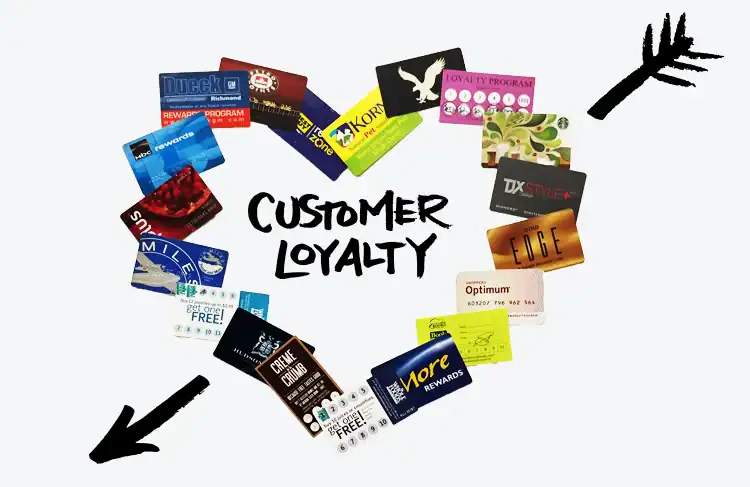
In a world flooded with digital options, winning a customer’s loyalty is tougher and more vital than ever. Customer retention isn’t just about repeat purchases; it’s the art of keeping buyers hooked, engaged, and choosing you over the competition time and time again. Forget chasing new leads alone; businesses now sink or soar based on how well they hold onto the customers they’ve already won.
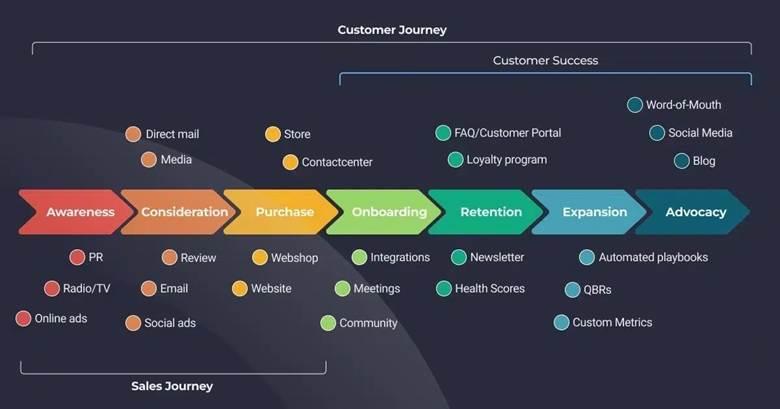
Understanding Customer Retention: Why It Matters
Research by Bain & Company has shown that growing customer retention rates by only 5% can increase profits by 25% to 95%. Customer loyalty leads to higher spending, increased referrals, and reduced price sensitivity. In contrast, acquiring new customers is often five times more expensive than retaining current ones.
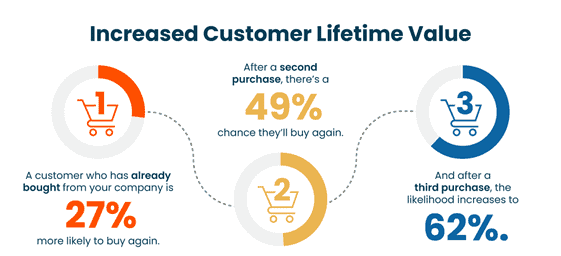
Customer retention refers to the efforts and strategies a business uses to keep its customers engaged and continuing to make purchases over time. Unlike customer acquisition, which focuses on attracting new buyers, retention is about fostering long-term relationships with existing ones. Why does this matter? Retaining customers is significantly more cost-effective than acquiring new ones – studies suggest it can be five to twenty times cheaper. Loyal customers also pay more, and returning customers pay as much as 67% more than new ones.
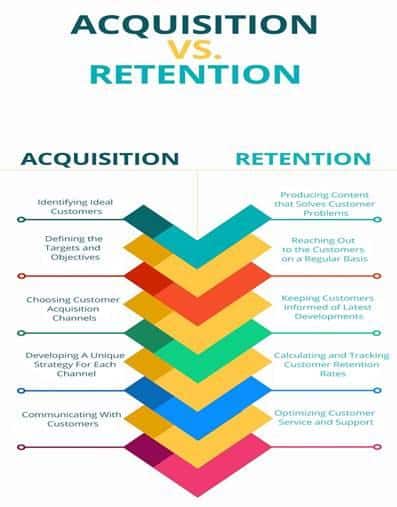
Customer Acquisition vs. Customer Retention
The most common pitfall for businesses worldwide is that they believe that if they possess a good product or service, then customer retention will automatically follow. The harsh truth is that it’s merely a short-term strategy. Simply put, if you take your existing customers for granted, they will leave! It is as simple as this: Customers want to feel valued. The moment you make them feel that you don’t care about them or their business, they’ll find someone else to do business with. An even harsher truth is that, whether you like it or not, your customers may just … leave!
So, what’s the takeout? Businesses must continuously work to earn and sustain customer loyalty. Those that recognize this make deliberate investments in customer retention, acknowledging it as the primary driver of revenue, according to KPMG. When considering the significance of customer retention, 82% of businesses think that customer retention is cheaper than customer acquisition.
In addition:
- On average, businesses lose 50% of their customers every 5 years
- A general business has a yearly defection rate of 10-30%
- And the truth is that 80% of marketing spend goes to customer acquisition – even though acquisition costs have risen more than 50% over the last 5 years!
Customer Segmentation: Personalizing the Experience
To keep customers engaged, personalization is key. Customer segmentation allows businesses to divide their audience into distinct groups based on shared characteristics, such as demographics, purchase behavior, or preferences. By understanding these segments, they can tailor experiences that resonate deeply with each group. For example, a coffee shop might segment customers into espresso enthusiasts, latte lovers, or cold brew fans, sending targeted offers for their favorite drinks.
Effective Loyalty Programs: Rewarding Repeat Engagement
Loyalty programs are a cornerstone of retention strategies, incentivizing customers to return through rewards, discounts, or exclusive perks. Take Starbucks, for instance. Their rewards program has a points system whereby customers are rewarded with stars upon purchases, which can be converted to free drinks or merchandise. High-value customers receive exclusive perks like early access to seasonal items, while newcomers get a free drink upon joining. Another example is Sephora’s Beauty Insider program, which combines points with an online community where customers can share tips and connect, adding an emotional layer to the experience.
Hooked on Convenience: How Habits Drive Retention
Ever found yourself ordering from the same café without thinking? Or automatically opening Netflix the moment you sit down? That’s not a coincidence – it’s a habit.
The most successful companies don’t just attract customers – they become part of their everyday lives. Think of Spotify playing your favourite Monday playlist, or a quick Starbucks order placed with a tap. These brands have made repeat engagement feel effortless. When interactions are easy, rewarding, and repeatable, they become second nature. That’s how casual users turn into long-term loyalists without even realising it.
Emotional Loyalty: Creating Deeper Connections
While transactional rewards are effective, emotional loyalty takes retention to the next level. Emotional loyalty is about forging a deep connection where customers choose a brand because they feel aligned with its values or mission. For example, TOMS’ “One for One” policy, where a pair of shoes is donated for every purchase, resonates with customers who value social impact. This creates a sense of purpose, making customers feel part of something bigger. When customers trust and connect with your brand, they’re less likely to switch to competitors, even when offered lower prices.
The Final Take: Why Retention Wins
Customer retention isn’t about pleading for loyalty; it’s about crafting irresistible reasons to stay. With smart segmentation, irresistible loyalty programs, and genuine emotional connections, brands can forge bonds that feel unbreakable. In a chaotic and crowded market, those who master retention don’t just boost profits; they build vibrant tribes of loyal customers who return not out of obligation, but because they’re all in, heart and soul.
Written by – Aman Madan
Edited by – Anjali Khimasiya