
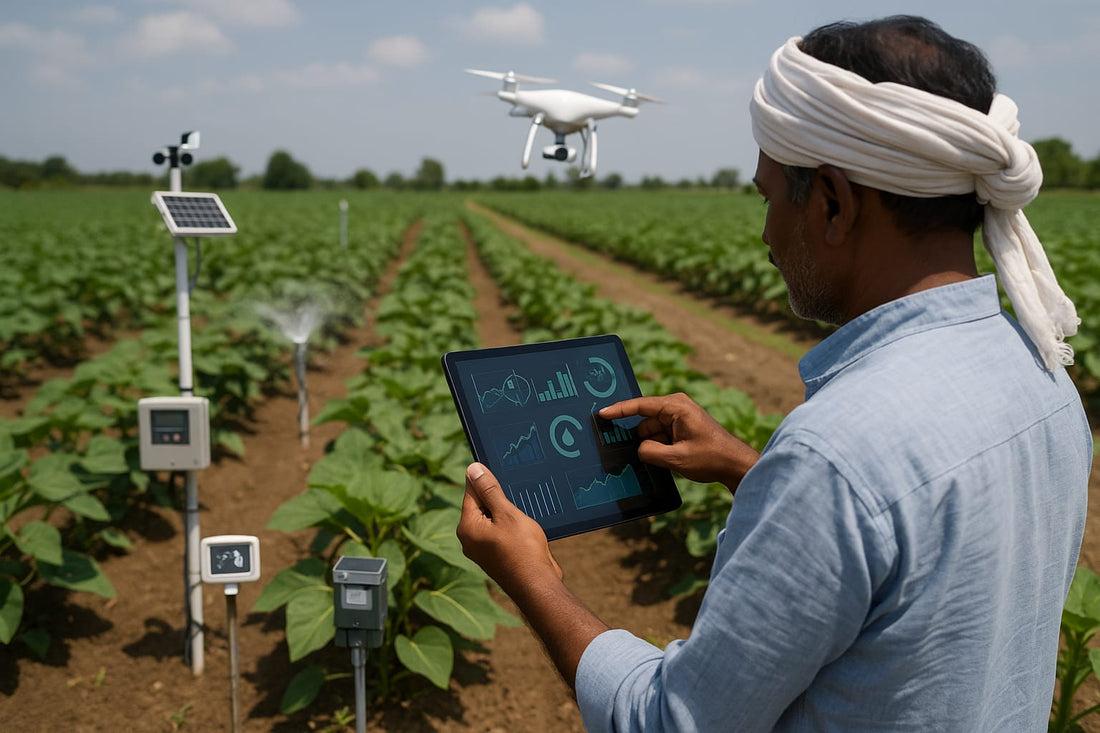
Changing climate is affecting crops and diminishing hopes, leaving farmers pinching pennies.
Farmers are infamously called ‘annadatas’ across India. The term literally means food provider in Sanskrit. Imagine Kalpana is a paddy farmer in India. She gathers paddy seeds, treats them, prepares her field and finally plants them. The clock ticks as she pays attention to the crop’s needs and now she is eagerly waiting for the harvesting season. But due to unexpected heavy downpours, the entire paddy crop gets ruined because her field gets flooded.
Now, imagine a parallel scenario. You are a paddy farmer; you are about to follow the entire cultivation process but you are alerted about the over-the-top rains this monsoon. And now you know that planting paddy seeds right before a potential flood situation is uneconomical. This is just one instance of rain pattern shifts in India due to climate change. In addition, India experiences excessive heatwaves associated with El Niño, surface level water shortages, increased droughts, unseasonal rains leading to farm floods and so much more because of increased global warming.
The Indian Agriculture: Its Fame and its Infamy
India is still largely an agrarian economy. Agriculture and allied sectors constitute 18% of its GDP and employ more than 58% of the workforce. The Green Revolution in the 1960s revolutionized wheat and rice production in India. From a food aid dependent nation to a food surplus country, India became a grain exporter. Yet Indian agriculture is grappling with serious issues today, such as water scarcity, soil degradation, pest breakouts, economic issues of farmers and more.
The Irritating Variations: Why do these Unusual Changes Happen?
Climate change is threatening India’s agriculture and food security. Only 48% of India’s farmlands are equipped with irrigation facilities, and the rest? They depend on rainfall whose pattern in India is unpredictable. Methods like drip irrigation and sprinkler methods are not used on 90% of farms due to high initial costs and lack of technical knowledge.
States like Punjab, Tamil Nadu, Uttar Pradesh and Bihar are constantly under threat of prolonged droughts each year. Moreover, over-extraction of groundwater in Punjab and Haryana has led to its alarming depletion. Not harvesting crops that can tolerate a variety of climates and continuing with monoculture crops is one of the major reasons of crop failures.
“Regions like Marathwada that are drought prone are experiencing floods while the heatwaves around India are ensuring that kharif crops take longer to grow. This would mean rabi crops like wheat are planted later making them prone to early heatwaves, leading to low quality and lower yield.”
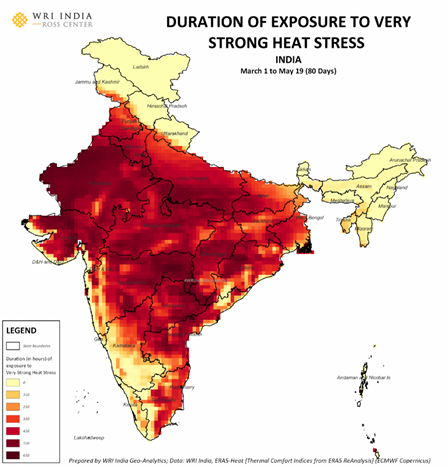
Figure 1. Heat stress across India and its implications for agriculture.
Pulling of Chain: Supply Chain Constraints
When crop yields are unstable, procurement processes cannot predict whether there will be a shortage or surplus. If the yield is below the expectations, then crop mills and processing plants face scarcity. Then prices rise and consumers bear the end costs while farmers bear the losses. For high-demand crops such as sugarcane and potatoes even a 10% yield miss may disrupt mill schedules and trigger cold-chain utilization. Another pain point is the illegal hoarding of crops and corruption, both common in India.
The Somewhat Solution Agriculture Extension Systems are designed to transfer modern AI powered farming solutions to farmers. Technological solutions such as drought-resistant crops, precision farming methods and digitalization should be used. Kalpana can benefit from AI models that fuse satellite imagery, predict weather, provide soil-health updates, and offer comparative trend analysis.
However, the downside is that in most cases, one extension officer serves thousands of farmers across expansive rural areas in India. This makes knowledge dissemination difficult. This gap means farmers are back to square one using traditional crops and conservative methods because they are not yet aware of better alternatives.
Climate Tech Positioned Against Climate Change
Climate tech, or cleantech, uses technology and innovation to address the challenges posed by climate change. India’s agriculture is increasingly climate-dependent. This is directly hitting crop yields and indirectly food supply chains, prices, and farmer incomes. At the same time, digital public infrastructure, cheap smartphones, and falling satellite-data costs make it feasible to deploy climate-tech at scale for smallholders.
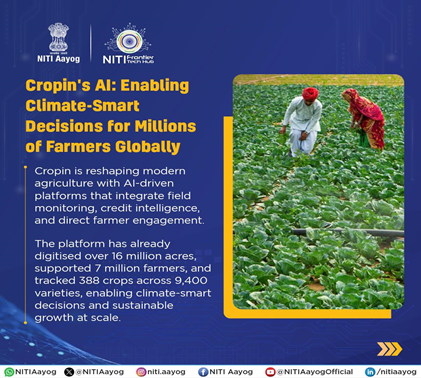
Figure 2. AI and digital technologies enabling climate-smart agriculture.
Climate-aware models using deep hybrid learning and zone-specific learning reduce prediction error by 12% compared to traditional machine learning approaches. Platforms like Map My Crop can predict crop health and identify pests up to two weeks in advance, with about 87% accuracy. This helps in taking preventive action before visible damage to crops.
Microsoft’s Sowing AI leverages AI to optimize sowing windows, identify drought-prone areas, and guide input management, enhancing adaptive capacity. It has helped to increase crop yields by 30% in Andhra Pradesh.
Climate Tech Preventing Supply Chain Constraints
Climate-tech fixes this by using satellite and AI models to forecast yields 30–60 days ahead and flag pest or stress risks 10–14 days in advance, turning unknowns into quantifiable risk ranges. That earlier visibility lets players pre-book storage, labour, and transport; write climate-adjusted volume clauses into contracts; trigger timely on-farm interventions; and align credit and insurance to real yield risk, shifting the system from reactive shock management to proactive flow planning where climate uncertainty becomes a managed input rather than a hidden liability.
National Incentives and Initiatives
The Government of India has introduced measures like:
- PM Fasal Bima Yojana [PMFBY]: Provides financial assistance to farmers in cases of crop failures due to droughts, floods, etc. As of 2023, 36 crore farmer applications have been insured under PMFBY, offering critical support during extreme weather events.
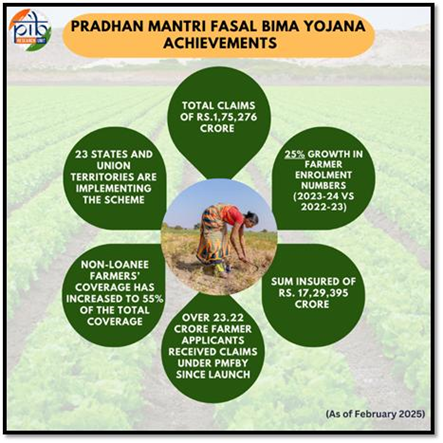
Figure 3. Pradhan Mantri Fasal Bima Yojana: Providing financial protection against crop losses.
- Yes Tech: Government-backed systems like Yes Tech enable the use of remote sensing and AI to estimate yields through crop simulation models that provide physics-based yield predictions calibrated to local conditions, as well as weather intelligence based on temperature, humidity, and hyperlocal rainfall tracking from Automated Weather Stations.
Startups such as CropIn, SatSure, DeHaat, AgroStar, Fasal, and BharatAgri are already using satellite, plus Internet of Things [IoT] and Machine Learning to offer farm intelligence, yield forecasts, and risk scores to millions of farmers across millions of acres.
Implementation Gaps
Under PMFBY, issues like delays in claim settlement and low coverage in rainfed areas remain areas requiring policy improvement.
With the integration of ML and AI in climate tech, farmers find it hard to understand and use complex dashboards.
Solutions that just give false hope of resolving the problem are not sustainable. Farmers need trust above all to bring about change.
Agri-Climate Tech Integration
Climate-aware software should be inclusive of each zone’s climate and incorporate satellite vegetation indices, daily weather updates for farmers through WhatsApp or other messaging platforms, and soil data such as soil type, pH, nitrogen content, and historical yields for each crop type, all in one app or interface.
“Climate tech is indeed a silver lining in the fight against climate change leading, helping address crops failures and supply-chain disruptions.”
References:
The Pharma Journal, IBEF, Agriculture Institute, Research Gate, BBC India
Written by- Kaveri Joshi
Edited by- Poonam Saxena