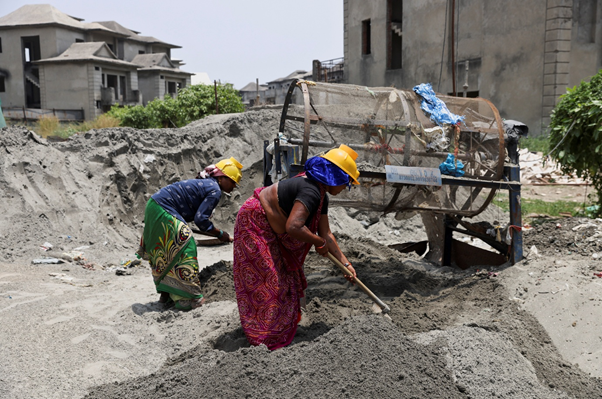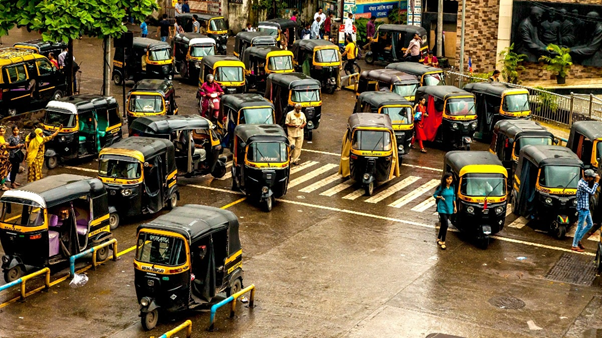
Every year India holds its breath for the arrival of the season of monsoon. India is the fastest growing economy, though the largest share of rural areas still depend on agriculture as their occupation and for their daily living. The amount of rainfall in India decides the yield and the prices of the agricultural goods in the market. Therefore, the southwest monsoon is being referred to as the “finance minister” of India. In 2026, India experienced one of the weakest monsoons in nearly two decades, showing erratic weather patterns and a rise in temperature along with the low rainfall in India making the economy vulnerable. The major reason said is the effect of El Niño.
El Niño : History.
El Niño, derived from the Spanish language meaning “The Boy” (referring to Christ’s child) as it first occurred during the time of Christmas. It is the type of climate pattern that occurs when warm water in the Pacific Ocean spreads eastward from Asia towards South America, disrupting the normal ocean-atmosphere present. The normal conditions of the ocean atmosphere is generally when the trade winds blow from the east to west across the Pacific Ocean. Warm water pools in the western Pacific region which is near to the Asian continent and cold water upwells along South America’s coast. Whereas, the effect of El Niño on the ocean temperature is that it weakens or reverses the trade winds, warm water spreads across the Pacific toward America, sea surface temperature rises from 0.5 to 3 degree Celsius above normal and this triggers the global weather disruptions.
Impact of El Niño on India:
The El Niño shows extreme weather conditions. The impact of El Niño on India is majorly seen as weak or failed monsoons leading to drought, crop failures and an ultimate increase in the price of goods and services. The first strongest El Niño was observed in the year 1877 – 1878, followed by in the year 1982 – 1983, 1997 – 1998, 2014 – 2016. Now, in the year of 2026, the effect of El Niño on India has resulted in monsoon failure along with the rise in the local climate temperature. The Southwest monsoon in India typically lasts from the month of June to September in India accounting for around 70% to 80% of monsoon.
Therefore, a delayed monsoon or a failed monsoon can trigger consequences such as crop failure due to inadequate water supply, increase in food inflation, slowing of economic growth, lower or no income for farmers. The drought in 2015 shows the cost which the Indian economy paid was estimated around $10 billion and led to deeper poverty of workers. Thus monsoon plays a significant role in India and the reliability of monsoon is quite high in India and countries which highly depend on agriculture as their living. Climate change is making rainfall patterns more volatile, also leading to extreme conditions such as some years bring floods whereas other years bring drought.
India is ambitious about growth and GDP targets along with the aspiration to become a $5 trillion economy by the end of 2027 – 2029. Yet these plans depend on agriculture stability and adequate food production, as despite rapid industrialization and growing of the service sector & manufacturing sector, agriculture still remains non-negotiable in India’s economy. When monsoons don’t come, the money that people in farming areas earn drops fast. This causes a chain reaction. When people in farming areas spend less, it means there is less need for products made in factories. This leads to jobs in non-farm areas in rural regions. It also puts pressure on the government because when farmers struggle, the government has to offer help packages to them.
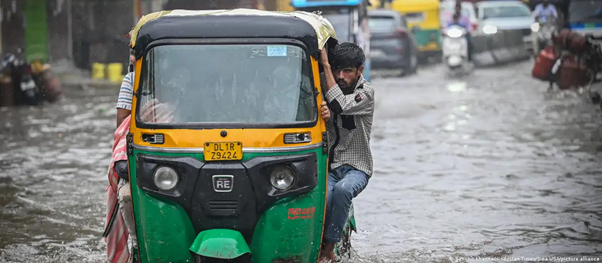
Source : dw – https://www.dw.com/en/disrupted-monsoons-force-india-to-face-climate-threat/a-78324753
Impact on Economy:
When the monsoons are bad, food prices go up. This has happened in the past when food prices went up by 20% to 40% during years. This creates a problem for the central bank, the RBI. Higher food prices push inflation up, this forces the bank to increase interest rates. Higher interest rates slow down investments, make industries grow slower and create less jobs. This is a situation where either inflation gets worse or economic growth suffers. India became self-sufficient in terms of food years ago. This was an achievement for a country that used to suffer from regular famines. Now India sends rice, wheat and other farm products to countries. The ability to produce food has slowed down a lot. Yields for crops like rice and wheat are not increasing in many areas. More stress from changing weather such as rain, longer dry periods, unexpected frosts means farmers are having difficulty keeping up with current levels of production, let alone increasing them. A lot of India’s success in farming has come from using underground water. However these underground water sources are being used up faster than they can get refilled. In states like Punjab and Haryana, the water level has dropped a lot. Less rain caused by climate change makes this problem worse, creating a cycle: When the monsoons fail, farmers use more groundwater, which makes the problem even worse.
While the way food is grown and sold around the world is changing, India’s system still depends on crops such as rice, wheat and lentils. This single crop approach makes the whole system weak. A bad monsoon affects areas a lot. Since these areas often grow crops, food shortages can go up fast in those places.
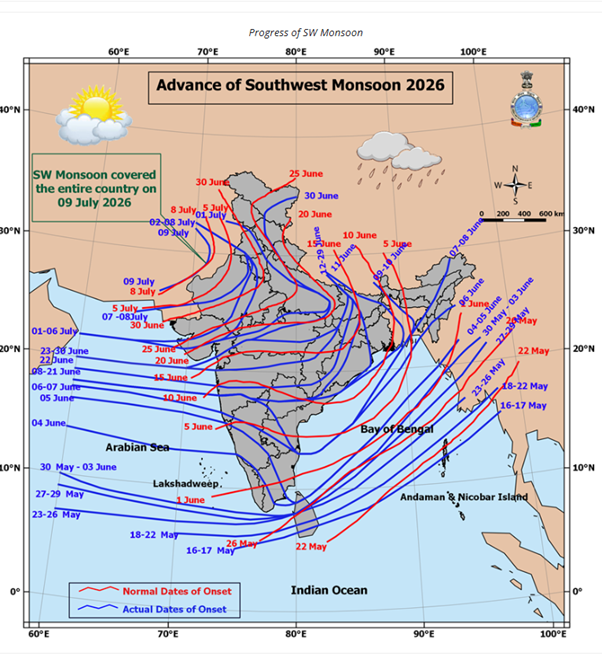
Source: mausam.imd.gov.in– IMD department
Recent studies on climate show a difficult situation. The monsoon in India is expected to change in ways. It will be more unpredictable: variation between wet and dry years. It will not be across the country, some places will get too much rain while others will get too little. When it does rain, it will come in downpours causing floods and soil loss instead of gentle steady moisture. These are not just guesses. They are things that are starting to happen. Farmers in parts of India say the patterns are changing in ways that break the knowledge that people have had for generations about when to plant, what to plant and how to take care of their land.
Therefore, the question still remains: Can India’s systems handle the problem? And the honest answer for this is that, India has some choices to make and hence needs to take appropriate decisions on the same.
India cannot ignore the changes in the monsoon. It must work hard to adapt to water safety, big investments in collecting rainwater using small-scale irrigation and refilling underground water, growing of crops, encouraging farmers to grow crops that can handle the climate and that are good for people to eat, using of new tools, farming that uses exact information devices that check soil moisture and weather forecasts using computers, helping people in rural areas earn more.
The 2026 monsoon season is not just about the amount of rainfall. It is a test of India’s ability to handle problems, how well it governs and how strong its people are. A weak monsoon will show weaknesses in the system; a good one gives time to make things better. What is clear is that India cannot deal with a changed climate by using ways. The question is not if the monsoon will challenge India’s economy and food system, it’s whether India can act fast to create real strength against the climate before the next problem comes. The importance of keeping the economy steady, making sure there is food and protecting millions of jobs has never been higher.
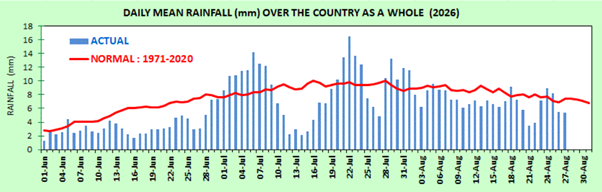
Source: IMD department
References:
- https://www.pib.gov.in/PressReleaseDetail.aspx?PRID=2266479®=3&lang=1
- https://www.business-standard.com/industry/agriculture/sub-par-monsoon-not-a-crisis-agriculture-has-shown-resilience-chand-126050300221_1.html
- https://economictimes.indiatimes.com/news/india/skymet-cuts-2026-monsoon-forecast-sees-70-chance-of-drought/articleshow/133305091.cms?from=mdr
Written by: Priyal Patel
Edited by: Avilasha Bakshi