As housing costs rise and everyday expenses compete for a larger share of household income, Mumbai faces a question beyond economic growth: who can still afford to live here?
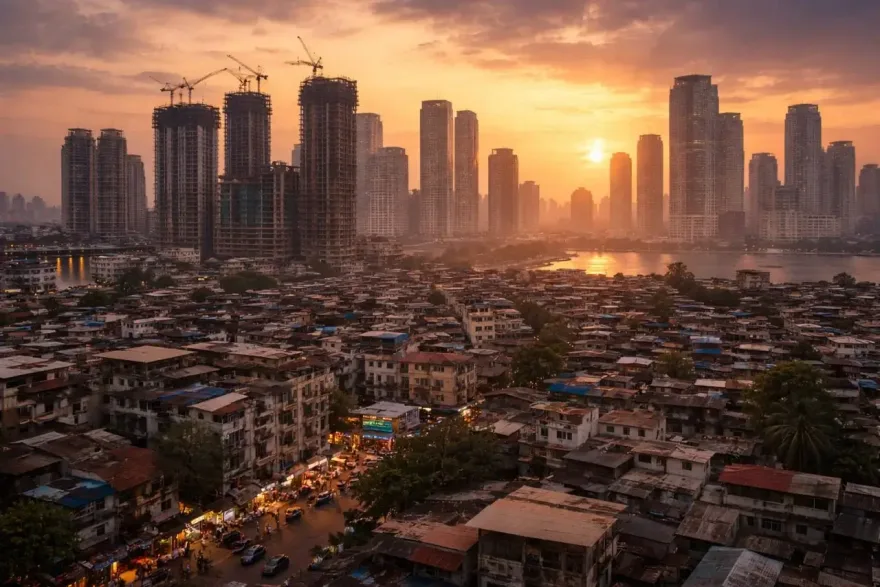
Mumbai has always sold a promise: work hard, find an opportunity and build a better life. People arrive from different parts of the country hoping to find employment, education and financial independence. The city offers opportunities across finance, entertainment, trade, technology and countless informal occupations.
Yet, behind this promise lies a growing contradiction. A person may find a job in Mumbai, earn a regular salary and still struggle to afford a home within a reasonable distance of their workplace. When rent, transport, groceries and other necessities consume most of a monthly salary, how much of that income is actually left to enjoy the city?
THE PRICE OF HAVING A ROOF OVER YOUR HEAD.
Housing is one of the most obvious examples of the affordability issue in Mumbai. Limited land availability, high demand, redevelopment and the concentration of job opportunities have caused housing to become more expensive.
In 2025, the average price of housing in Mumbai was around ?8,856 per square foot. This represents an increase of 7% compared to the previous year. There were 97,188 housing sales in the city during this time. Despite the high prices, there is still high demand for housing (Knight Frank India, 2026).
Who can afford this?
In the first half of 2026, the Knight Frank Affordability Index reported that a typical household would have to spend around 69% of its income on monthly mortgage EMI payments. This is well above the 50% affordability threshold (Knight Frank India, 2026).
Renting can also become an issue. The Home Attainability Index by the Urban Land Institute reported that around 53% of monthly household income would be spent on renting an apartment. While the report noted the limitations of using list-based data for housing, this does show how expensive it can be (2025).
For many households, owning a home is a distant dream. Renting can also become expensive in a well-connected area.
WHEN THE SALARY DISAPPEARS BEFORE THE MONTH ENDS.
Housing is just one of many factors that make up the urban economy. Food, electricity, healthcare, education, transport and many more everyday expenses all compete for a share of monthly income.
This leads to a disposable income squeeze.
For example, a household may have to pay a large percentage of its income on rent. After paying for food, transport and utilities, there will be little left to cover healthcare, education, emergency costs and savings. Even with a rise in salary, the cost of living can mean that households do not see a major improvement in their quality of life.
The issue is thus what a salary can buy.
THE HIDDEN COST OF DISTANCE.
In some cases, housing near employment hubs has become so expensive that people seek more affordable options further away. This results in added economic costs through commuting.
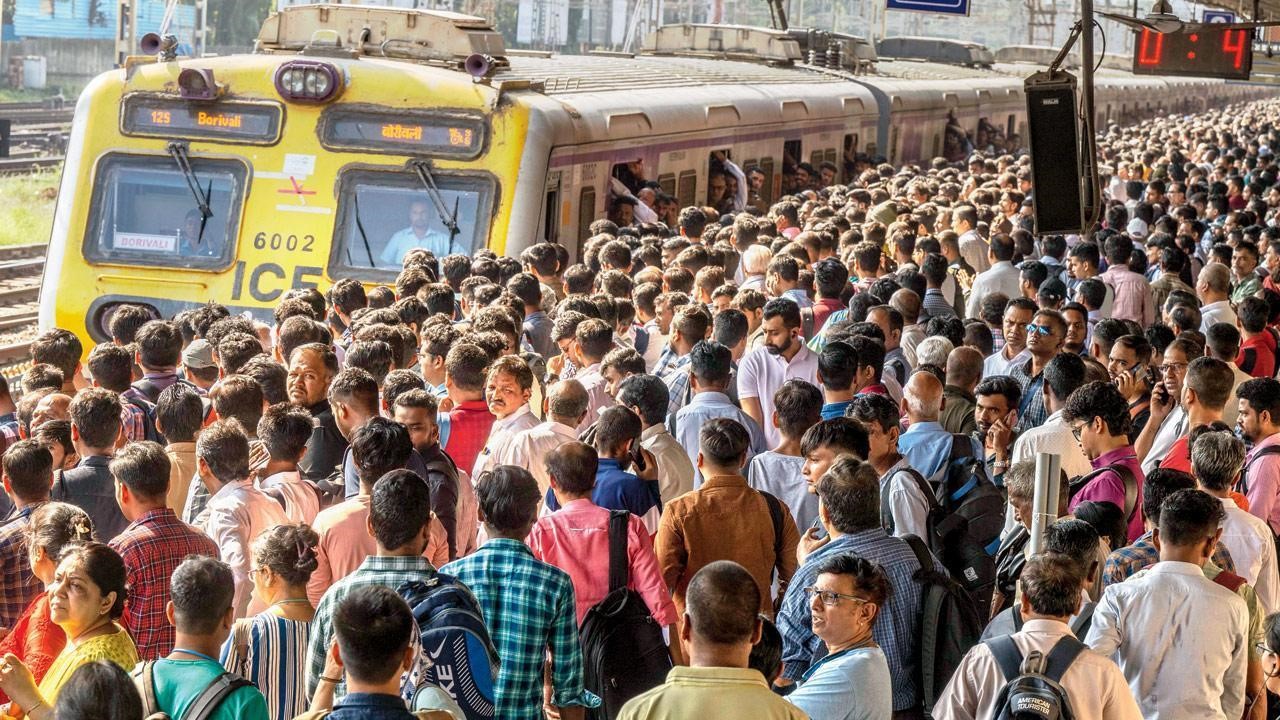
Although Mumbai has an extensive transport system including suburban railways, buses and metro services, long commutes can reduce the time people have to relax, spend time with their families, pursue education and attend to their personal lives.
According to the National Household Travel Survey 2025-26, workers in urban areas across India spend an average of ?1,044 per month on their commute to set workplaces. Urban workers spend an average of 27 minutes commuting (MoSPI, 2026). These figures are for urban areas across the country, not specifically in Mumbai.
Overall, commuting can create economic costs. Not only does it cost money to commute, but it can take up a large amount of time.
A CITY OF UNEQUAL LIVING CONDITIONS.
Housing conditions vary considerably across Mumbai. There are areas of high-end housing development but also areas where there are overcrowded homes with insecure housing and poor access to basic facilities.
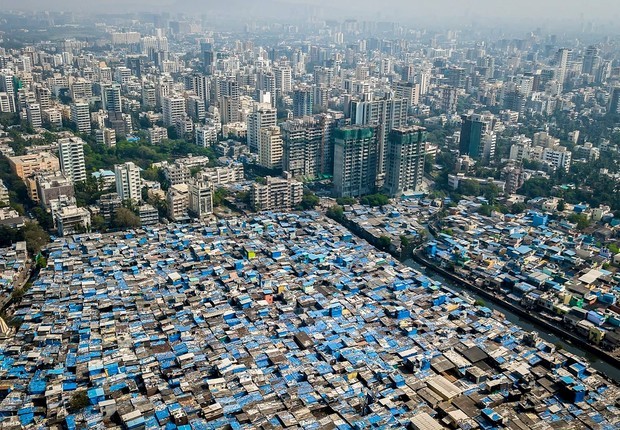
According to a January 2026 report in The Indian Express, 8.84 lakh slum homes had been surveyed across 2599 slum clusters by December 2025. Officials have estimated that this could be up to 13 lakh homes (The Indian Express, 2026).
This indicates that although economic growth can increase property prices and create wealth for some, it does not guarantee everyone will have access to safe and affordable housing.
The World Cities Report 2026 by the United Nations Human Settlements Programme also highlights this issue. The report highlights how affordability of housing affects inequality, job accessibility and overall wellbeing. In India, the percentage of affordable housing in the eight largest cities has decreased from 52% in 2018 to 17% in 2025 (UN-Habitat, 2026).
Are housing options that are affordable for standard households being created?
CAN MUMBAI REMAIN A CITY FOR THE MIDDLE CLASS?
Mumbai does not need to be put on hold. It is crucial to the economy by supporting workers, businesses, entrepreneurs and those who help keep the city running. However, success cannot just be measured by high property prices, lots of investment into infrastructure and lots of jobs.
It needs to consider if people with average incomes can live comfortably, with access to affordable housing, good public transport, healthcare and education.
By providing affordable rental housing, better public transport, better urban planning and more affordable housing, such pressures could be eased. Employment opportunities should be distributed more widely across the entire city instead of being concentrated in a few expensive areas.
Perhaps the most important thing to consider when considering a successful city is how many people can share its prosperity.
Mumbai will always attract people due to the opportunities it provides. However, in order to make the city liveable, people need to know that they can afford to live there, have something to save for the future and enjoy the life they have worked so hard to achieve.
Written by: Sachi Patil
Edited by: Vania Jain
REFERENCES
Knight Frank India. (2026). India real estate: Residential and office market, H2 2025. https://content.knightfrank.com/research/3070/documents/en/india-real-estate-office-and-residential-market-h2-2025-12597.pdf
Knight Frank India. (2026, July 3). Home affordability remains stable across six major cities in H1 2026; MMR and NCR stay above threshold. https://www.knightfrank.co.in/
Ministry of Statistics and Programme Implementation. (2026, October 5). National Household Travel Survey July, 2025–June, 2026. Press Information Bureau. https://www.pib.gov.in/PressReleasePage.aspx?PRID=2319180
Sabah Virani. (2026, January 6). SRA surveys over 8.8 lakh slum homes in Mumbai; biometric data collected from 6.1 lakh. The Indian Express. https://indianexpress.com/article/cities/mumbai/sra-surveys-slum-homes-biometric-data-collected-10459010/
Urban Land Institute. (2025). Home attainability index 2025. https://knowledge.uli.org/-/media/files/research-reports/2025/uli-hai-report-2025_finalised_9-july.pdf
United Nations Human Settlements Programme. (2026). World cities report 2026: The global housing crisis. https://unhabitat.org/sites/default/files/2026/05/wcr_2026_chapter_3.pdf