Diwali fell on Sunday, this year on November 8. By Monday, the civic authorities banned aerial firecrackers and rockets in Mumbai. Delhi woke up to smog a few hours after Diwali. Different stories, same root.
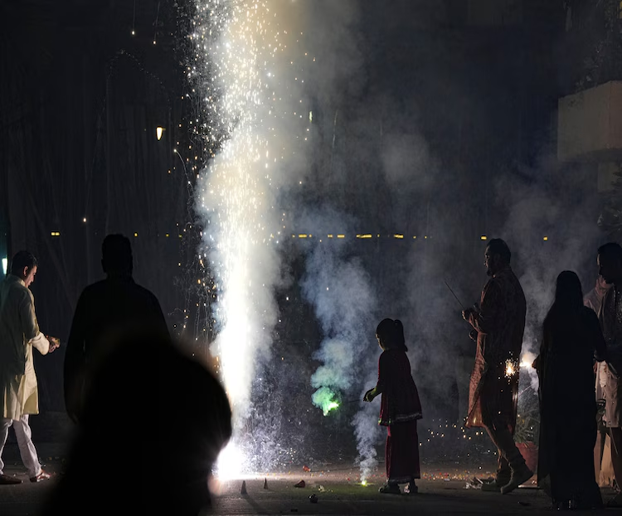
MUMBAI ON DIWALI.
The fire brigades received a total of 142 calls on the night of Diwali, of which 137 were due to firecrackers. Diwali was named “black day” for the fire department. Even after deploying more staff, the situation couldn’t be handled. Numerous firecracker accidents caused fire officials to scramble from “one spot to another.”
ACCIDENTS CAUSED BY FIRECRACKERS.
During the blazes, two women were injured. Major fires broke out in Dongri, Marol, and Vidyavihar. In Dongri Haji Kasam Chawl on Dr. Maheshwari Road, it took fire brigades approximately nine hours to extinguish the fire. A garage fire on Military Road in Marol almost took five hours to extinguish. Additionally, the fire at Skyline Vida, a ten-storey building in Vidyavihar, took six hours to extinguish, because it spread from the seventh to tenth floor. The list goes on with Powai, Oshiwara, and Kurla. Although the injury count was low, that owes more to luck than safety.
ARE THE LANES OF MUMBAI DANGEROUS?
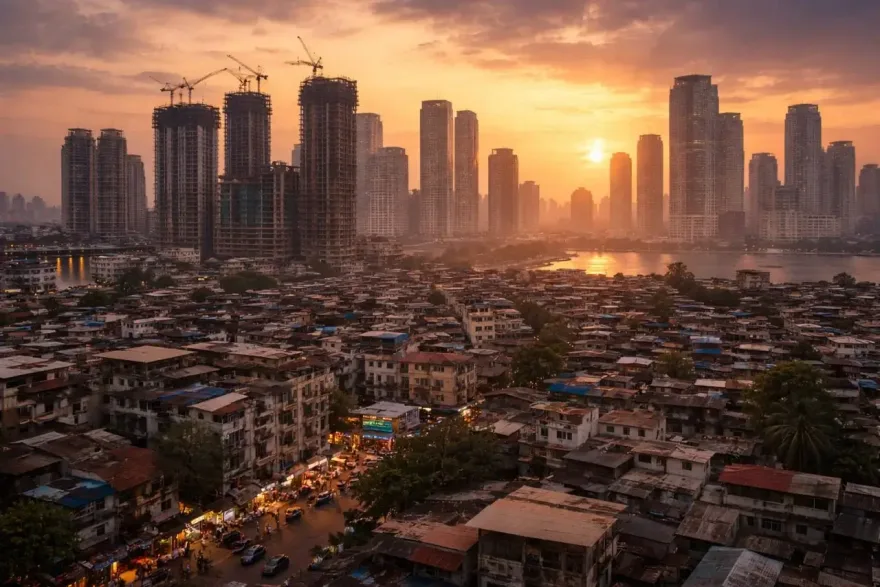
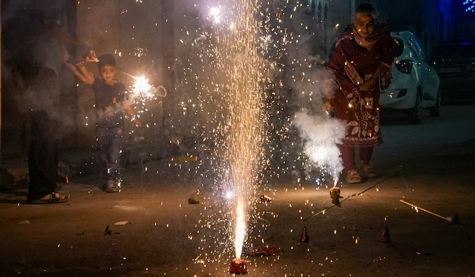
Mumbai’s dense and congested neighbourhoods, high-rise buildings, narrow roads, closely packed residential and commercial structures make it even more hazardous for individuals and property. The authorities warned that burning remnants of aerial fireworks and rockets can land on rooftops, balconies, and other combustible surfaces, causing fires. Since the path of aerial fireworks is untraceable, they can even land inside someone’s home.
THE BAN IMPOSED BY THE GOVERNMENT.
On Monday, BMC’s Urban Disaster Management Authority imposed the ban under the Disaster Management Act, 2005. It came into effect on November 9, 2026 running until 11:59pm on November 25. Thane and Navi Mumbai followed the same route but with a different deadline. The ban covers rooftops, balconies, slum pockets, and residential buildings. The use of other firecrackers remained subject to existing laws. Thane has gone to the extreme, imposing a ban until January 8, 2027. The restrictions are mandatory to ensure public safety and fire-related incidents.
TAKE OF PUBLIC PERSONALITIES ON DIWALI.
Three major fire incidents were reported in the city during Diwali, gutting several houses, shops, garages, and parts of a commercial building. These incidents forced the BMC to impose a ban on firecrackers.
Public Personalities such as Aaditya Thackeray, Shiv Sena (UBT) Leader, calls for action over firecrackers randomly flying into people’s homes. Even the filmmaker Vivek Ranjan Agnihotri stated on social media that a random rocket burnt his sofa on the balcony. Although he deleted the post later, such incidents raise concerns about public safety.
This time, BSPCA hospital treated animals and birds for shocks, burns and other injuries. Over 60 people received treatment for injuries caused by “anar.” The rising number of fire-cracker related accidents raises the question of whether we can celebrate a safer Diwali?
THE STORY OF DELHI: THE SAME ROOT.
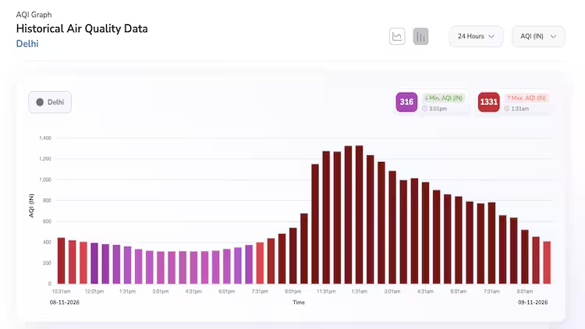
Delhi’s story is a familiar one, except this time Delhi recorded its “most polluted” Diwali in the past five years, with an AQI of 371, the highest post-Diwali reading since 2021. This situation arose largely because citizens ignored the rules.
AQI-ACTION ACROSS DELHI.
The national capital remained in the “very-poor” category on Diwali morning. Multiple areas were recorded an AQI above 400, raising serious concerns about the poor air quality. Localities like Jahangirpuri and Punjabi Bagh witnessed the highest AQI of 450. This was the scenario before Diwali, and people were tense about the post-Diwali consequences.
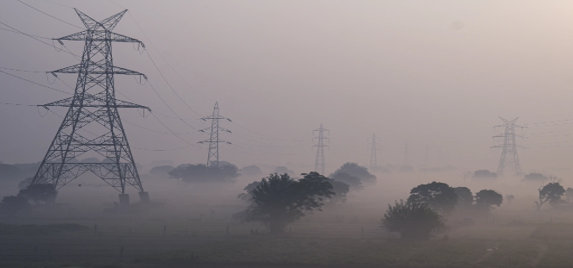
Those fears came true. On Monday Morning, a thick grey haze surrounded the city. Twenty monitoring stations recorded “severe” air quality. Sonia Vihar registered the worst AQI at 463, followed by Jahangirpuri at 450. Readings above 450 are treated as “severe plus”. The city’s average still sat in the “very-poor” band, hiding how worse things were in the severely affected localities and neighborhoods.
GREEN CRACKERS OR CONVENTIONAL CRACKERS?
The Supreme Court allowed the manufacturing and sale of certified Green Crackers in Delhi-NCR region, subject to stricter provisions. But a complete ban on firecrackers came into effect on November 9. People were allowed to burst crackers within the two-hour window. Yet fireworks continued well past the deadline in several neighborhoods until 3 am. As per reports, conventional firecrackers were also burned in many localities, with pollution levels rising to their peak.
THE POST-DIWALI CONSEQUENCES.
The Commission for Air Quality Management (CAQM) invoked Stage III after the pollution level fell into the “severe” category. A ban was imposed on non-essential construction and demolition activities, along with restrictions on diesel vehicles and additional restrictions on industrial and polluting activities.
Firecrackers weren’t the only cause. Reports pointed to vehicular emissions, stubble burning, and weakening winds that could trap the pollution. This makes Delhi even riskier. The smog set off a political exchange between the BJP and the AAP.
The post-Diwali spikes have sent many to hospitals with coughs, throat irritation, and breathing difficulties. Even the healthiest individuals are reported to be experiencing respiratory discomfort. The “green patakas”, meant to create less pollutants, reduce emissions by only 30%; the remaining 70% is the same as that of other conventional firecrackers.
Unnecessarily outings for shopping or walking should be reduced, because Delhi’s AQI is fluctuating heavily. Symptoms might not appear immediately. Healthy individuals exposed to severe pollution for five to six hours could experience problems.
CONCLUSION.
If we put the two cases alongside each other, in Mumbai the cost of fireworks showed up as flames and fire brigades. In Delhi, the impact was witnessed through smog, making it extremely difficult for people to breathe in. The damage is unfolding through unfollowed rules and burning firecrackers.
We usually say “We’ve been burning crackers for generations.” True, but is it necessary to continue this tradition when our planet is engulfed in smog and individuals are suffering with respiratory conditions? Why can’t we, as grown-ups, take accountability and responsibility for our actions? Would it be too much to ask that we not burst crackers just this once?
References:
- Asia News Network. (2026). Delhi chokes on post-Diwali smog as AQI crosses 400, ruling party BJP, AAP trade charges. https://asianews.network/delhi-chokes-on-post-diwali-smog-as-aqi-crosses-400-ruling-party-bjp-aap-trade-charges/
- Business Standard. (2026, November 9). Delhi AQI today: Delhi’s post-Diwali air remains ‘very poor’; 15 locations record severe AQI. https://www.business-standard.com/india-news/delhi-s-post-diwali-air-remains-very-poor-15-locations-record-severe-aqi-126110900063_1.html
- Deccan Chronicle. (2026). Mumbai bans rockets, aerial firecrackers till Nov 25 after Diwali fire scare. https://www.deccanchronicle.com/nation/mumbai-bans-rockets-aerial-firecrackers-till-nov-25-after-diwali-fire-scare-2003020
- Hindustan Times. (2026). Up in smoke: Delhi flouts firecracker curbs as residents flag violations despite cops on ground. https://www.hindustantimes.com/cities/delhi-news/up-in-smoke-delhi-flouts-firecracker-curbs-101794250459792.html
- Mid-day. (2026). Mumbai: BMC bans aerial firecrackers until November 25 after Diwali fires. https://www.mid-day.com/mumbai/mumbai-news/article/mumbai-bans-rockets-and-aerial-firecrackers-until-nov-25-after-diwali-fire-incidents-keep-firefighters-on-edge-23659252
- Mumbai Live. (2026). Diwali 2026: Mumbai records 89 fire incidents; 1 died, 4 injured. https://www.mumbailive.com/en/civic/mumbai-records-89-fire-incidents-during-diwali-1-dead-4-injured-94985
- Mumbai Mirror. (2026). Mumbai records nearly 400 firecracker-related fire incidents across MMR in one night, fire brigade calls it an “extreme day”. https://www.mumbaimirror.com/opinion/where-have-all-the-grown-ups-gone-1747279
- Open The Magazine. (2026). Delhi’s post-Diwali toxic air crisis: Doctors warn of severe health risks. https://openthemagazine.com/india/delhi-post-diwali-i-am-surprised-we-are-still-alive-aiims-doctor-warns-of-toxic-air
- Outlook Business. (2026). Post-Diwali pollution spike: Delhi’s air quality index reaches alarming levels. https://www.outlookbusiness.com/industry/post-diwali-pollution-spike-delhis-air-quality-index-reaches-alarming-levels
- Sahil Online. (2026). Delhi wakes up to thick grey haze as post-Diwali pollution worsens. https://sahilonline.org/delhi-wakes-up-to-thick-grey-haze-as-post-diwali-pollution-worsens
- The Times of India. (2026). 390 fires caused by crackers across Mumbai region on Diwali; aerial fireworks, rockets banned in city and Thane. https://timesofindia.indiatimes.com/city/mumbai/390-fires-caused-by-crackers-across-mumbai-region-on-diwali-aerial-fireworks-rockets-banned-in-city-and-thane/articleshow/135690251.cms
Written by: Ritvi Kanwar
Edited by: Poonam Saxena